A meeting starts late because the table needs wiping. An employee leaves a workstation to find soap for an empty dispenser. A spill waits for someone to locate the right supplies.
These small problems take time away from the work people came to do.
Clean workspaces support productivity by making shared areas ready to use and reducing avoidable interruptions. Regular cleaning also supports workplace hygiene.
The strongest approach combines suitable products, clear responsibilities, and a schedule that reflects how the building is used.
Make Everyday Work Easier to Start

Cleaning and organization solve related problems. Cleaning removes dirt and residue; organization gives tools and supplies a dependable place.
Together, they make it easier to prepare a desk, use a shared printer, or set up a meeting without clearing someone else's leftovers first.
Cleaning
Removes dirt and residue, keeping work surfaces and shared spaces ready for their intended use.
Organization
Gives equipment and supplies dependable locations so employees can find what they need without unnecessary delays.
Start with recurring frustrations.
If employees regularly clean a breakroom table before lunch or search for paper towels, review the cleaning schedule and refill process. A small operational fix may remove the same interruption for several people each day.
Support Hygiene Where People Share Surfaces
Door handles, shared touchpads, restroom fixtures, and meeting tables receive frequent contact.
The CDC recommends regular cleaning of frequently touched surfaces and cleaning other surfaces when visibly dirty.
Cleaning with suitable detergent products removes dirt and many germs. Disinfection addresses germs remaining after cleaning when needed.
Focus on Frequently Used Areas
Make hygiene easy to practice by keeping hand soap and drying supplies available.
Give shared workstations a clear cleaning procedure, including who is responsible and which products are compatible with the equipment.
Employees should not have to guess whether a cleaner is safe for a screen or keyboard.
Workplace cleaning supports hygiene, but it is not a guarantee against illness.
Cleaning is one part of a broader approach to employee health. It cannot guarantee fewer absences or prevent every illness. Avoid treating the appearance of a spotless desk as a measure of overall workplace health.
Consider the Air as Well as the Surfaces
A room can look clean while still having an air quality problem.
The EPA notes that office cleaners and other common products can release pollutants and odors. It recommends attention to ventilation and reducing exposure when selecting products.
A stronger fragrance is not evidence of a healthier room.
Review the products being used, how they are applied, and whether the space has appropriate ventilation.
Practical Indoor Air Quality Considerations
- Coordinate cleaning activities with building management.
- Keep air supply and return vents unobstructed.
- Report leaks or persistent odors promptly.
- Arrange appropriate HVAC maintenance.
- Review cleaning products and application methods when irritation is reported.
- Consider cleaning schedules and ventilation before adding fragrances.
If employees report irritation after a particular task, review the product, application method, timing, and ventilation rather than adding more fragrance.
Choose Products That Support the Task
Match cleaners to the surface and follow equipment manufacturers' instructions.
When disinfection is needed, follow label directions, including contact time, ventilation, and protective equipment.
Never mix cleaning chemicals.
Train the people using cleaning products and keep containers properly labeled.
Build a Focused Workplace Cleaning Supply List
Surface Cleaning
Suitable surface cleaners and microfiber cloths selected for the materials and equipment being cleaned.
Floor Care
Appropriate tools and cleaning products for the flooring types and maintenance tasks in the workplace.
Waste Management
Waste liners and related supplies suited to the building's containers and collection procedures.
Restroom Essentials
Hand soap and paper products compatible with the dispensers already installed in the facility.
Confirm which items your cleaning contractor supplies before placing duplicate orders.
A short, approved product list can make replenishment easier. Keep a documented alternative for essential items so substitutions receive a compatibility check before use.
Give the Cleaning Routine a Clear Owner
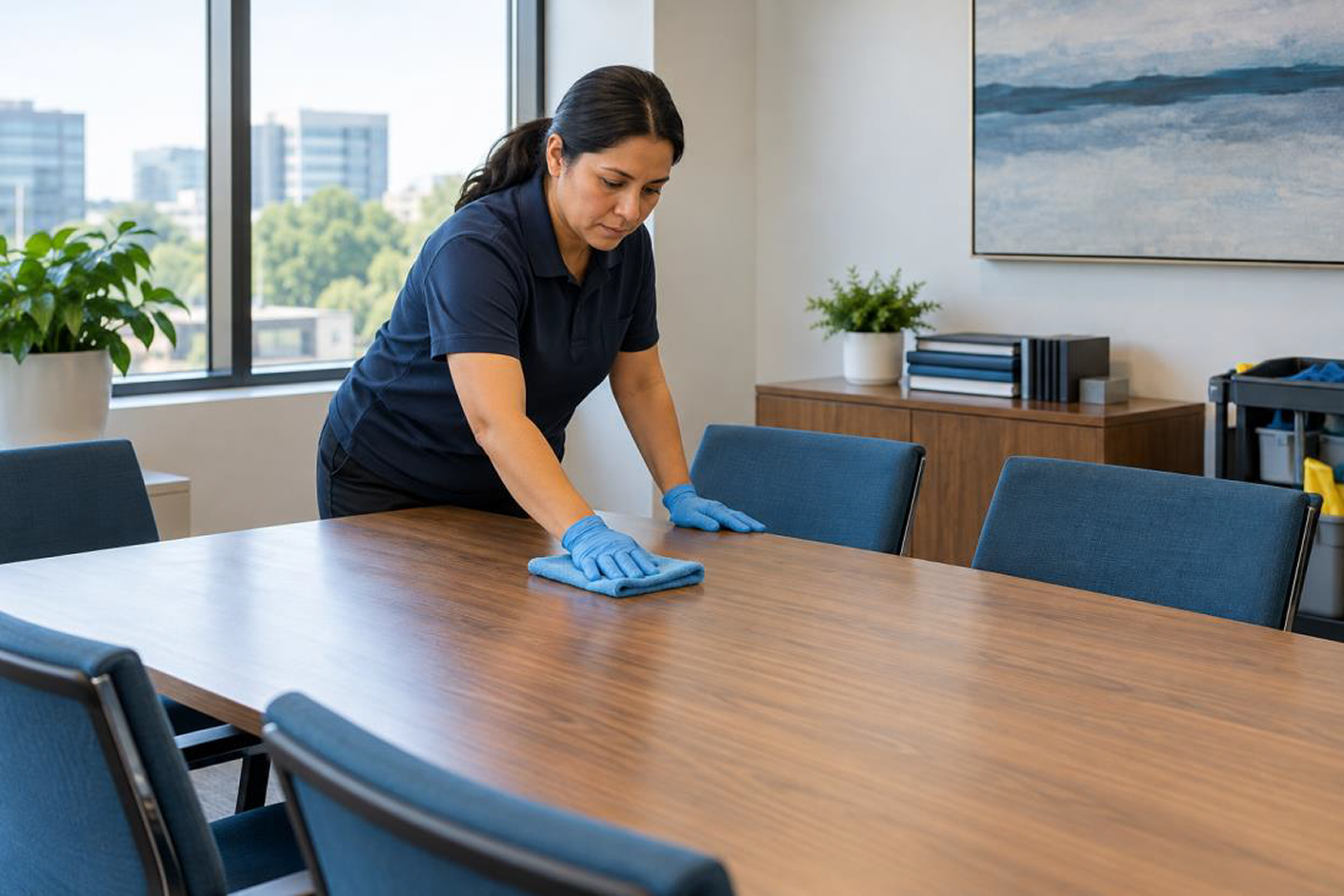
A workable routine names the area, task, responsible person, and check time.
Adapt the frequency to occupancy, traffic, visible soil, and the work being done. A busy reception desk and a rarely used training room may need different schedules.
Establish Clear Cleaning Responsibilities
As a starting point, check restroom refills and busy shared spaces during the day, remove waste before bins overflow, and address spills promptly through the assigned process.
Plan deeper cleaning of floors, storage areas, and other less accessible surfaces around actual use.
Keep employee responsibilities practical.
Staff can return shared items and report problems, while trained cleaning personnel handle the tasks assigned to them.
Make it clear how to report an empty dispenser, damaged mat, or area that needs attention.
Check Whether the Routine Is Working
Track repeat complaints, supply shortages, rooms unavailable for use, and time spent resolving avoidable issues.
Ask employees which shared areas still require extra preparation. These observations can show where the process needs adjustment.
Recurring Complaints
Identify areas where employees repeatedly report cleanliness or maintenance problems.
Supply Shortages
Monitor missing soap, paper products, and other essential cleaning supplies.
Room Availability
Record shared spaces that cannot be used promptly because cleaning or preparation is required.
Avoidable Interruptions
Review time spent locating supplies, reporting problems, or resolving preventable cleaning issues.
Interpret employee health trends carefully.
Seasonal infections, occupancy, and other factors affect attendance. A change in illness-related absences alone does not prove that a cleaning program caused it.
Use operational measures to assess improvements that can be observed directly.
Start With One Shared Area
Choose a space that generates recurring complaints. Review its cleaning tasks, supplies, storage, and ownership, then adjust the routine.
Check the results after a few weeks before expanding the same approach elsewhere.
- Identify a shared area with recurring problems.
- Review the current cleaning process.
- Check product availability and storage.
- Assign clear responsibility for each task.
- Adjust the schedule to actual workplace use.
- Evaluate the results before expanding the process.
A practical cleaning program helps keep shared spaces ready, supplies available, and workplace routines easier to manage.
Office Solutions offers facility and janitorial solutions that can support your workplace supply plan.
Bring your current product list and recurring challenges to a conversation about making cleaning and replenishment easier to manage.
Ready to Find Your Office Solution?
Contact our team to discuss facility and janitorial supplies that support cleaner shared spaces, consistent replenishment, and practical workplace routines.
Contact Us Today