An empty soap dispenser or a missing trash liner can interrupt an otherwise routine workday.
Start with the areas your employees and visitors actually use. An office, retail store, school, and warehouse will need different quantities and some different products.
Use the categories below as a starting point, then adapt the list to your building, occupancy, equipment, and daily tasks.
1. Restroom Supplies
Restrooms require dependable replenishment of hygiene products, compatible dispenser refills, and appropriate cleaning supplies.
- Toilet tissue and paper towels that fit installed dispensers.
- Hand soap and compatible refills.
- Waste receptacles, liners, and sanitary disposal supplies where needed.
- Restroom cleaners, toilet brushes, and designated cleaning cloths.
Check dispenser compatibility before ordering.
Record dispenser models and refill codes on the approved supply list.
Check guest restrooms and less frequently used areas as well as the busiest facilities. A full stockroom only helps when someone refills the dispenser.
2. Cleaning Products and Equipment
Choose cleaning products and equipment based on the surfaces, tasks, and maintenance procedures used in your facility.
- Surface cleaners suitable for desks, counters, glass, and restroom fixtures.
- Disinfectants where cleaning procedures call for them.
- Microfiber cloths, mop heads, buckets, brooms, and dustpans.
- Vacuum bags, filters, and other equipment consumables.
- Product labels, accessible safety data sheets, and task-appropriate gloves or eye protection.
Follow Safe Cleaning Practices
Never mix cleaning chemicals.
The CDC advises using suitable cleaning products, following label instructions, providing ventilation during cleaning, and never mixing cleaning chemicals.
If disinfection is needed, follow the product label's contact time and other directions.
Keep restroom cleaning tools separate from breakroom tools.
Check whether your cleaning contractor provides chemicals, equipment, or refills so your business does not duplicate purchases or overlook items that fall between responsibilities.
3. Waste and Recycling Supplies
Effective waste management starts with suitable containers, properly sized liners, and clear recycling instructions.
- Trash liners in the correct size and strength for each bin.
- Waste and recycling containers suited to the space.
- Clear sorting labels that match the collection service.
- Collection carts or replacement lids where needed.
Correct Liner Sizing
Match liners to the bin and the waste being collected. A liner that is too small may slip, while one that is much larger can use more material than necessary.
Accurate Recycling Labels
Confirm which materials your local collection service accepts before adding recycling labels.
4. Breakroom and Shared Kitchen Supplies
Shared kitchens and breakrooms need supplies that match the appliances, employee preferences, and food service activities actually present.
- Dish soap, suitable sponges or brushes, and paper towels.
- Dishwasher detergent if a dishwasher is installed.
- Coffee, tea, filters, and other items your team uses.
- Reusable cups and utensils, or disposable alternatives where appropriate.
- Food storage containers and date labels as needed.
Check equipment compatibility and storage requirements.
Check the actual equipment before ordering filters or refills. Store food and food-contact items separately from cleaning chemicals.
Include shared meeting areas in the count if beverages and refreshments are served there.
5. Entrance and Floor Care Supplies
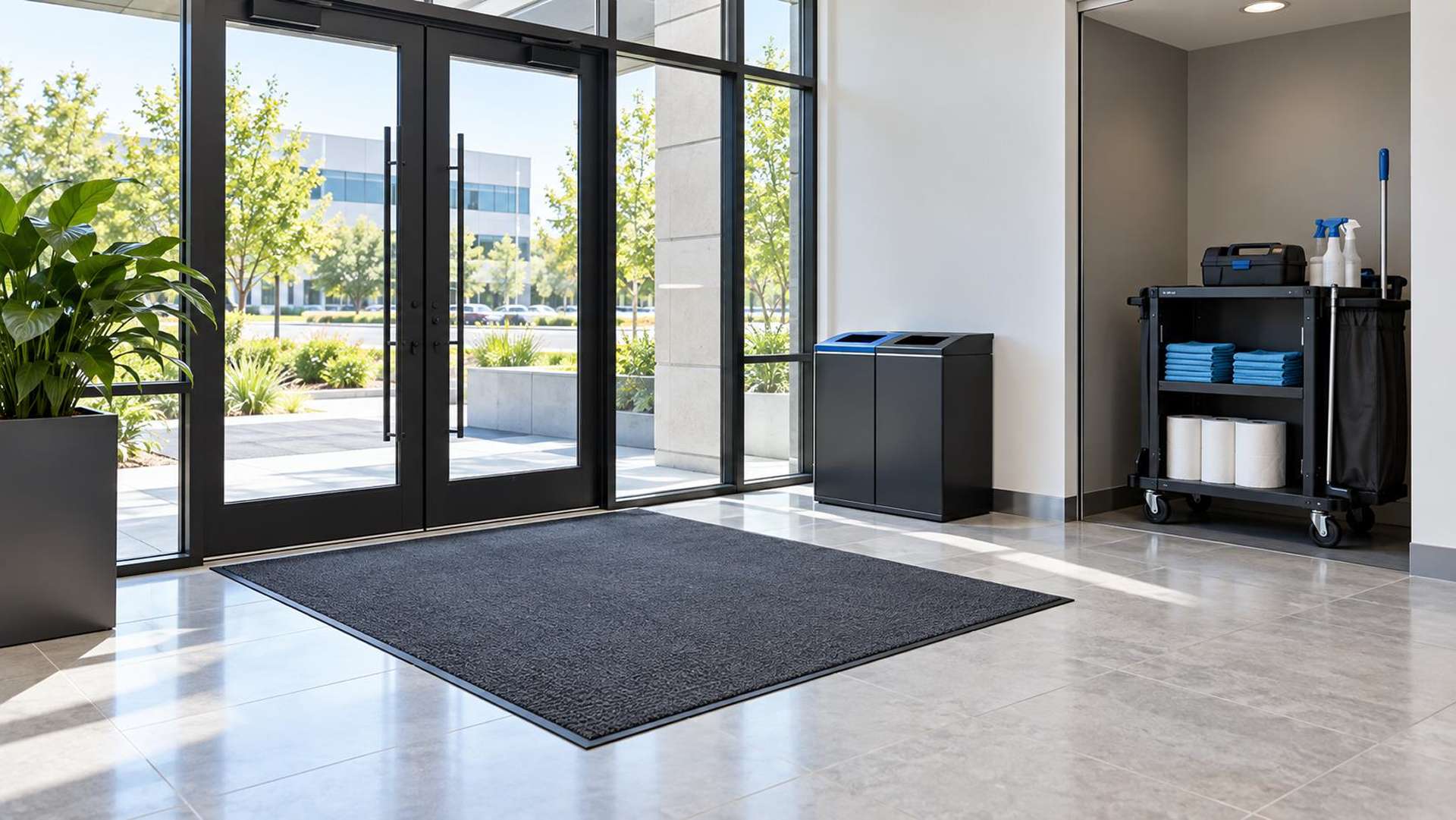
Entrances and high-traffic areas require suitable floor care supplies, safe walking routes, and equipment for addressing routine spills.
- Entrance mats sized for the doorway and walking route.
- Floor cleaners suited to each flooring material.
- Mops, replacement pads, and absorbents for routine spills.
- Portable wet-floor signs and barriers for temporary use.
Maintain Safer and More Practical Entrances
Review entrances before wet weather and check mats for curled edges, movement, or wear.
Ensure cleaning equipment has a designated storage space to keep walking routes clear.
Plan who will inspect busy entrances during the day rather than relying only on the opening clean.
6. Maintenance and Emergency Supplies
Maintenance and emergency supplies should reflect your building's equipment, authorized maintenance tasks, and emergency procedures.
- Approved replacement lamps, batteries, and equipment filters.
- Basic tools and replacement parts for authorized maintenance tasks.
- Flashlights and batteries or charged emergency lights.
- First aid kit refills and other supplies identified in your emergency plan.
Equipment Compatibility
Match replacement parts to the equipment model and keep maintenance tasks with qualified personnel.
Emergency Readiness
Set inspection dates for emergency supplies and replace expired or damaged items.
Specialized operations will need additional supplies based on their work and site requirements.
Turn the Checklist Into a Restocking Routine
A facility supply checklist becomes more useful when it is connected to a consistent replenishment process.
Give each category an owner and record the product code, storage location, unit of purchase, current stock, and reorder point.
Include the supplier's usual lead time so your ordering schedule reflects how long replenishment takes.
Track the Essential Inventory Details
Calculate a Practical Reorder Point
Set the reorder point from expected use during delivery lead time plus a practical reserve.
Example: Paper Towel Inventory
Suppose your business uses two cases of paper towels per week and your supplier takes one week to deliver.
Weekly Consumption
2 cases
Delivery Lead Time
1 week
Reserve Stock
1 case
Reorder Point
3 cases remaining
2 cases + 1 reserve case = 3 cases
This is an illustrative example. Adjust the reorder point when occupancy, usage, or delivery reliability changes.
Keep Inventory Reviews Consistent
- Check busy areas daily.
- Schedule stockroom reviews according to consumption.
- Use older stock first where appropriate.
- Review expiration dates.
- Investigate repeated shortages before increasing every order.
Build Your Facility Supply List With Office Solutions
Office Solutions offers facility, janitorial, breakroom, and safety solutions to help businesses organize recurring supply needs.
Bring your current checklist, dispenser details, and recent purchase records.
Our representatives will review your supply needs and run a free cost assessment to show where recurring orders can be simplified.
A practical supply checklist supports more consistent operations.
Organize essential products by category, assign responsibility for replenishment, and review stock levels before shortages interrupt daily work.
Ready to Find Your Office Solution?
Contact our team to review your facility supply needs, simplify recurring orders, and request a free cost assessment.
Contact Us Today