
Start with the last three months of orders
You can’t manage supply costs from a single invoice. Review at least three months of order history and group purchases by category, department, and location.
Look for repeat orders placed a few days apart, several versions of the same item, rush shipments, and products that appear on invoices but not in storage. These patterns show where money slips through the process.
Build a short list of questions for each high-use item:
• How often do we order it?
• How many units do we use between orders?
• Does another department buy the same item?
• Are we paying for rush delivery?
• Is the product being replaced because it runs out or because it performs poorly?
This review gives you a working baseline. It also separates a price problem from an ordering problem.

Set one approved choice for routine items
Too many product choices can raise costs without improving the workday. If each person orders a different pen, notebook, or desk organizer, purchasing becomes harder to track and volume gets split across several items.
Create an approved list for routine supplies. Pick one dependable option for copy paper, sticky notes, folders, basic writing tools, trash liners, hand soap, and other common products. Keep exceptions for jobs that need a specific size, material, or performance level.
An approved list gives employees a clear starting point. It also helps the person placing orders to spot unusual requests before they reach checkout.
Use good-better-best rules
The lowest price should not decide every purchase. Match the product grade to the job.
Use a basic option for low-risk items such as scratch pads, internal file folders, or disposable breakroom goods. Choose a mid-range product when comfort, durability, or appearance affects daily use. Reserve premium products for customer-facing materials, special equipment, or roles that depend on higher performance.
This rule keeps the budget focused. Your team pays for quality where it earns its place and avoids paying for features no one uses.
Set minimum and maximum stock levels
Running out creates rush orders. Overstocking ties up cash and fills storage with products that may sit unused.
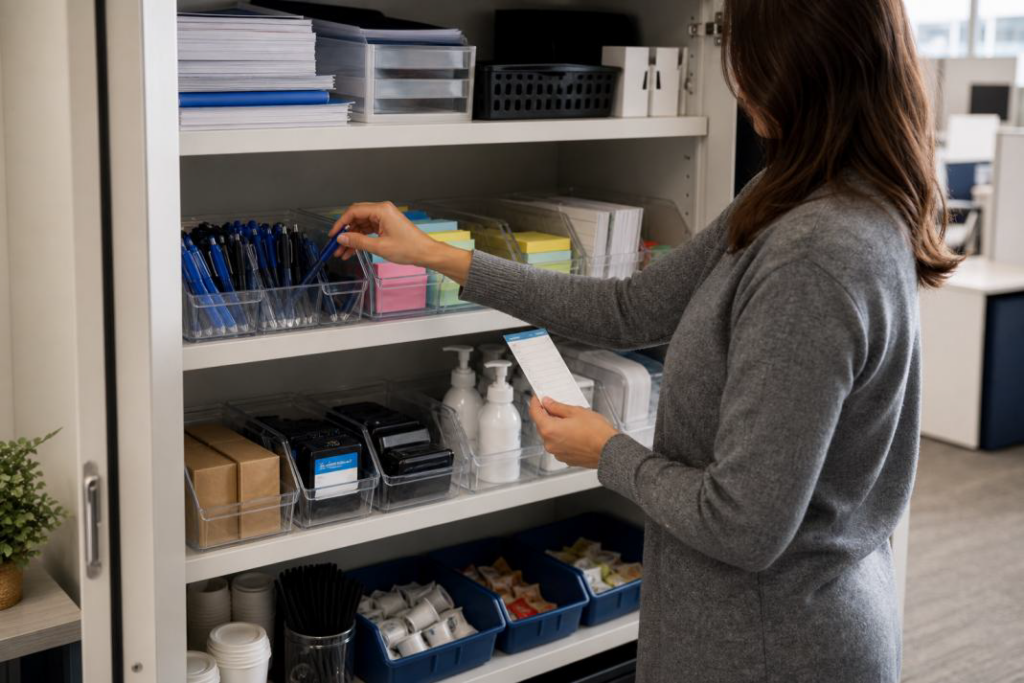
Give each recurring item a minimum and maximum quantity. When stock reaches the minimum, order enough to return to the maximum. Base both numbers on normal use, delivery time, available storage, and seasonal changes.
Start with the products your team orders most often. Review the levels after one or two order cycles. If a bin stays full, lower the maximum. If it empties before the next scheduled order, raise the minimum.
Combine orders on a fixed schedule
Scattered orders make it easy to miss duplicates and pay for avoidable deliveries. Set one or two order days each month for routine supplies. Ask departments to submit requests before a clear cutoff.
A fixed schedule gives the buyer time to check current stock, compare requests, and combine quantities. Keep an exception process for safety items, equipment failures, and other urgent needs. A forgotten box of pens should wait for the next order date.
Put one person in charge of the final order
Department input matters, but purchasing needs an owner. Give one person or a small procurement team authority to review requests, confirm approved products, and place the final order.
This doesn’t require a slow approval chain. The owner needs clear spending limits and a quick way to question an unusual request. The goal is consistent review before money leaves the budget.
Compare the full cost of each product
Unit price tells only part of the story. Check pack size, yield, durability, delivery charges, and replacement frequency.
A low-priced toner cartridge may produce fewer usable pages. Thin trash liners may require double bagging. A bargain chair mat that cracks in a few months creates another purchase and another delivery.
For products with a measurable yield, compare cost per use, sheet, page, or unit. For durable goods, track how often they are replaced. This makes product decisions easier to defend and repeat.
Reduce the number of suppliers
Buying from several suppliers can hide the real monthly cost. Each account brings its own pricing, order minimums, invoices, deliveries, and service contacts.
Move compatible categories to one workplace supply partner where the product range and service fit your needs. Office supplies, breakroom products, facility supplies, and workplace furniture may be easier to manage through one account.
Fewer suppliers make order history easier to review. They can also help your team combine purchases and spend less time resolving billing or delivery questions.
Ask for substitutes before cutting quality
If a product costs more than the value it provides, ask for a comparable option. A knowledgeable account representative can suggest a different pack size, material, brand tier, or product format that meets the same needs.
Be clear about what can’t change. A substitute may need to fit existing equipment, meet a facility requirement, or hold up under daily use. A good replacement keeps those requirements and removes cost that isn’t doing useful work.
Review a short scorecard every month
Keep the review small enough to use. Track monthly supply spend, rush orders, duplicate purchases, out-of-stock items, and products replaced sooner than expected.
Compare the results with the baseline from your first three-month review. If spending drops while stockouts or replacements rise, the cuts are hurting the workplace. Adjust the approved list, stock levels, or product grade.
Cost control works best as a monthly habit. Small corrections are easier than a year-end scramble.
Build a supply plan your team can follow
Office Solutions can help you review recurring purchases, narrow product choices, combine supply categories, and find alternatives that fit the job. Our team supports
office supplies, breakroom products, facility needs, workplace furniture, and account service through one supplier relationship.
Ready to get a clearer view of your monthly supply costs? Contact Office Solutions to review your current ordering process and find practical places to spend less.